
It can be tough to watch your normally active dog hesitate at the bottom of the stairs, or see your cat miscalculate a jump they used to nail every time. That moment of wobble sparks real worry about what comes next. The good news? Assistive devices like support harnesses, mobility carts, and traction aids can help pets stay active, confident, and comfortable. And when those tools are paired with therapies like chiropractic care and laser therapy, many pets get back to doing the things they love.
So when should you start thinking about mobility support? If you’re noticing slipping, hesitation, trouble rising, or any change in how your pet moves, it’s worth an evaluation. As the longest-running and only AAHA-accredited animal hospital in the county, our team at Lebanon Animal Hospital near Nashville approaches mobility concerns with careful exams, gentle handling, and clear guidance from diagnosis through rehabilitation. Request an appointment so we can recommend devices and strategies that restore confidence and comfort.
When Do Dogs and Cats Need Mobility Assistance?
Mobility aids aren’t a last resort. They help pets stay active, safer, and more comfortable at every stage.
Common reasons pets benefit from support include:
- Osteoarthritis: The most common cause of mobility changes in older pets, causing joint pain, stiffness, and reduced range of motion. Thoughtful arthritis management and prevention combines pain control, weight management, and supportive devices.
- Intervertebral disc disease (IVDD): Ruptured or bulging discs can press on the spinal cord, causing pain, weakness, or paralysis. Breeds like Dachshunds, Beagles, and other long-backed dogs are especially prone.
- Degenerative myelopathy: A progressive spinal cord disease most common in German Shepherds and similar breeds, causing hind leg weakness that advances over months. There’s no cure, but supportive care and assistive devices help maintain quality of life.
- Post-surgical recovery, limb amputation, or congenital differences: Some pets need help while they regain strength, learn to balance again on three legs, or because they were born with a little “something special”. Supportive devices can ensure safe and stable recoveries.
Signs to watch for: reluctance to jump or use stairs, a slower pace on walks or a “bunny hop” gait, slipping on smooth floors, difficulty standing, dragging toes, or posture changes like a hunched back.
A veterinary assessment should always come first. Our services include internal medicine, radiology, and low-stress handling to make mobility evaluations comfortable.
What Types of Assistive Devices Are Available?
The right choice depends on your pet’s diagnosis, body type, temperament, and home setup.
Support Harnesses and Slings
Support harnesses give you a safe way to assist during walks, bathroom breaks, stairs, and car transfers. Well-designed harnesses distribute weight across padded straps so you can help without pulling on the neck or hips. Choose between rear-only support or full-body assistance depending on your pet’s needs, and look for adjustable straps, soft lining, and secure handles. Check regularly for rubbing at the armpits, belly, and thighs. Introduce calmly with treats, and practice gentle lifting so the handle signals help rather than stress.
Some families use harnesses short-term after surgery; others rely on them long-term for chronic conditions. Our team shows you how to fit and use one correctly. For short term support, a bath towel slung under the belly can provide some needed stability during recoveries without the expense. For anxious or sensitive pets, our low-stress experience tailors each appointment to your pet’s comfort level.
Mobility Carts and Wheelchairs
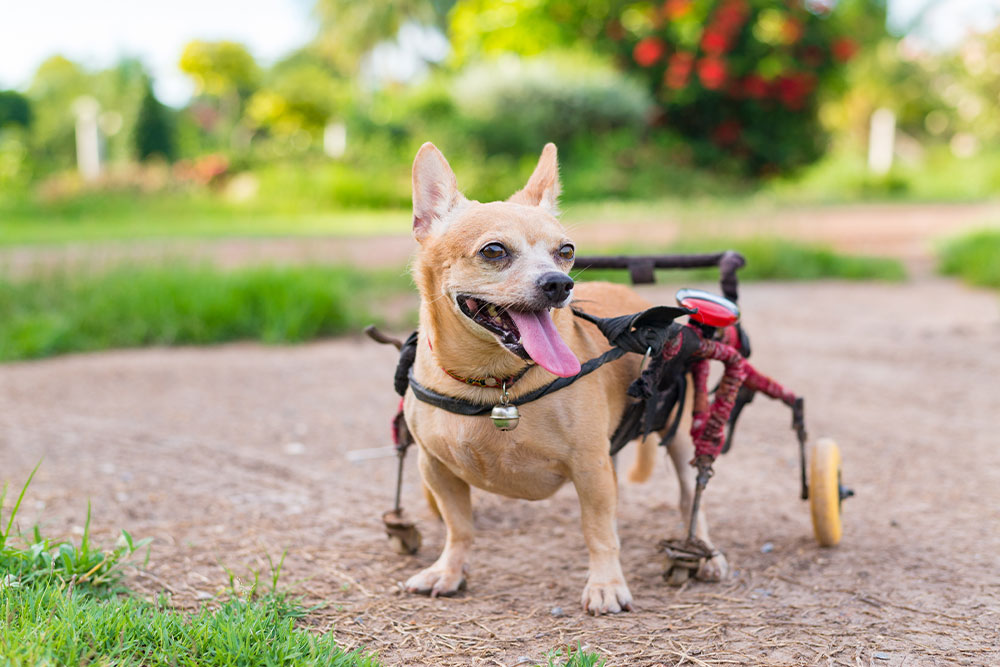
Mobility carts restore independence for pets with paralysis, severe hind limb weakness, or limb loss. They come in adjustable and custom-fit models for different sizes and needs. Accurate measurements and thoughtful configuration protect skin and joints. Start with short, supervised practice on even ground using positive reinforcement, then build up gradually. Check straps for pressure points and address any redness promptly.
Many pets thrive when carts are paired with targeted exercises, traction aids, and therapies like chiropractic or laser. Our veterinarians can help you create a plan that matches your goals and your pet’s personality.
Traction Aids and Grip Solutions
If your pet slips on hardwood or tile, traction aids can be a game changer. Options include nail grips (discreet and well-tolerated), booties and non-slip socks (full-paw coverage with breathable, rubberized soles), and paw wax for temporary tackiness during specific tasks. Introduce one paw at a time, reward calm standing, keep nails trimmed and paw fur neat, and combine traction with rugs or runners in high-traffic areas.
How Do Chiropractic Care and Laser Therapy Support Mobility?
Assistive devices help your pet move, but addressing the underlying pain, stiffness, and nerve function makes that movement easier and more comfortable. That’s where our in-house chiropractic and laser therapy services come in.
What Does Chiropractic Care Do for Pets?
Animal chiropractic focuses on the proper functioning of the spinal column and the neuro-musculoskeletal system. It offers non-surgical, drug-free options for correcting bone, disc, and soft-tissue issues related to spinal alignment and movement.
For dogs, chiropractic can help with pain and difficulty moving, muscle spasms, lameness, changes in posture or gait, trouble getting in and out of cars, recovery after injury or surgery, and improving range of motion for senior dogs.
For cats, chiropractic addresses difficulty jumping or climbing, poor grooming habits, changes in litter box behavior, pain or stiffness, recovery after injury or surgery, and improving mobility for senior cats.
During a chiropractic evaluation, the doctor assesses posture, gait, and spinal alignment through careful palpation, checking for symmetry, muscle tone, spasms, and range of motion. Adjustments involve a precise, controlled thrust to restore normal joint movement. The first visit takes about 20 to 30 minutes, and follow-ups run about 15 to 20 minutes. Many pets show noticeable improvement in comfort and willingness to move within just a few sessions.
How Does Laser Therapy Help With Mobility?
Laser therapy uses focused light energy to reduce inflammation, relieve pain, and accelerate tissue healing at the cellular level. Sessions are quick, painless, and well-tolerated. Most pets visibly relax during treatment. Laser therapy is especially valuable for pets with arthritis, disc disease, post-surgical healing, or chronic pain. It pairs naturally with chiropractic adjustments, assistive devices, and home modifications to give your pet the most comprehensive support possible.
Simple Home Modifications That Make a Big Difference
Small changes at home reduce slips and strain while complementing devices and therapies. Place runners or yoga mats along common routes, and incorporate arthritis-friendly home modifications like non-slip mats and ramps. Choose stable ramps with gentle angles and textured surfaces, and train slowly with treats until your pet is confident. Raise food and water bowls to a comfortable height, and provide orthopedic beds in warm, draft-free spots. For cats, home modifications include wide, low-entry litter boxes and stable perches with grippy surfaces make daily life easier. Our team can advise on placement, ramp angles, and rest areas based on your home layout and your pet’s specific habits.
How Do Assistive Devices Fit Into a Complete Care Plan?
Devices work best as part of a plan that reduces pain, builds strength, and supports daily function. A well-rounded mobility plan can include:
- Pain control to make movement comfortable
- Veterinary physical rehabilitation with targeted exercises
- Chiropractic adjustments to improve spinal function and range of motion
- Laser therapy for pain relief and tissue healing
- Acupuncture when appropriate
- Weight management and paced activity
- Assistive devices tailored to your pet’s needs
- Regular check-ins to adjust devices and update routines
At Lebanon Animal Hospital, mobility care is built into our exam process. We evaluate pain at every visit and adapt our handling to each pet’s comfort. Contact us to discuss an integrated plan.
Frequently Asked Questions
What’s the best first device to try?
For mild weakness or post-surgical recovery, a well-fitted support harness is the easiest starting point. It’s simple, versatile, and most pets adjust quickly.
How do I stop my pet from slipping on floors?
Add traction aids, trim nails regularly, keep paw fur tidy, and place non-slip runners in high-traffic areas.
When should I consider a mobility cart?
A mobility cart is a good option for significant hind limb weakness, paralysis, or limb loss. A veterinary assessment helps determine if it’s the right fit.
Can chiropractic help my pet’s mobility?
Yes. Chiropractic care addresses spinal alignment and joint function, which can improve comfort, gait, and range of motion. Many pets show improvement within a few sessions.
Is laser therapy painful?
Not at all. Most pets visibly relax during treatment. Sessions are quick, noninvasive, and work well alongside other therapies and devices. Our low-stress approach makes every visit easy.
Helping Your Pet Move Confidently
With the right devices, simple home tweaks, and a supportive care plan that includes chiropractic and laser therapy, most pets move more comfortably and regain confidence. Our AAHA-accredited team is here to guide, fit, and adjust equipment while cheering every win along the way.
Have questions or are you ready to start? Contact us or schedule an appointment, and let our team at Lebanon Animal Hospital be your partner in your pet’s care- every step of the way.